In today’s evolving global landscape, border security has become a central focus for nations seeking to safeguard their sovereignty and protect their citizens. Periods of heightened geopolitical tension and conflict place immense pressure on governments to strengthen their defense mechanisms, not only along physical borders but also across critical entry points and sensitive zones. During such times, the priority shifts from routine monitoring to continuous vigilance, where even the smallest anomaly can have significant implications.
This shift has accelerated the adoption of advanced surveillance technologies, transforming border management from a static process into a dynamic, intelligence-driven operation.
The growing complexity of border protection
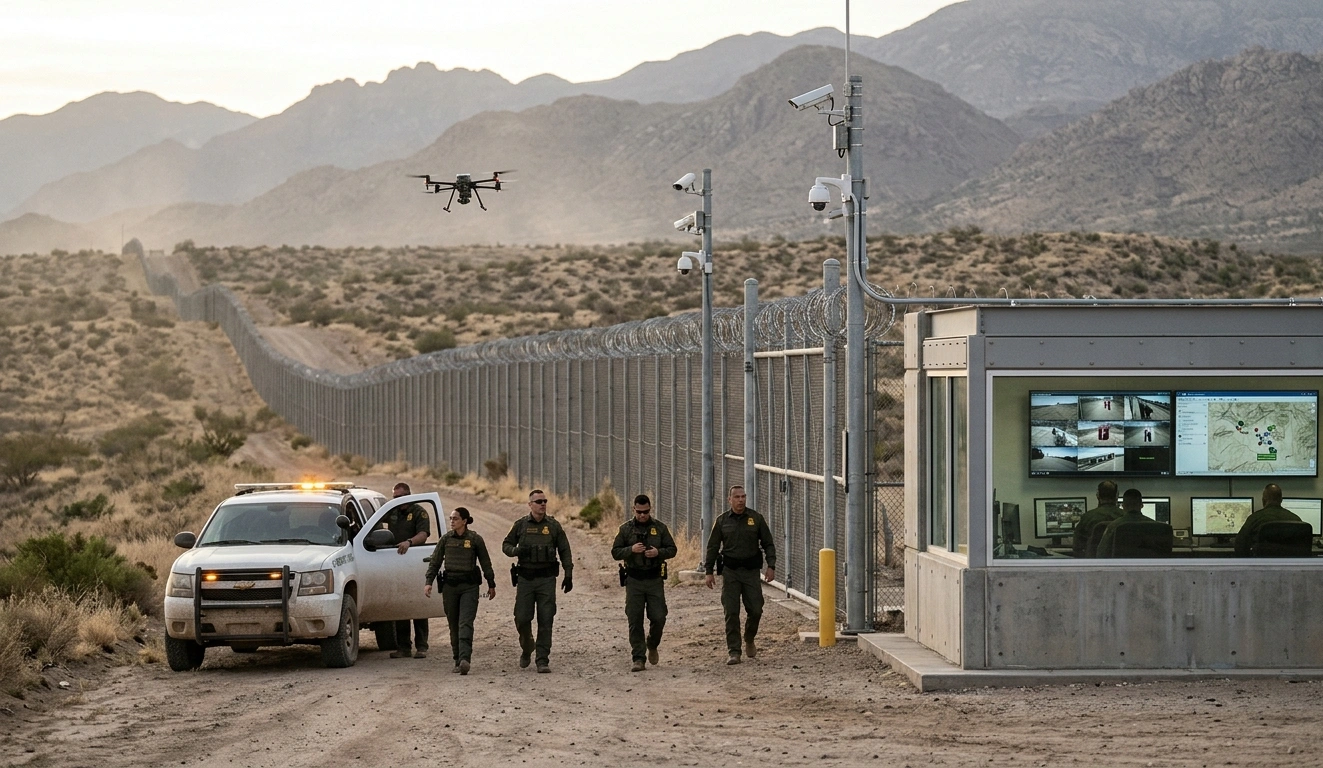
Modern borders are no longer simple lines on a map. They span vast terrains that include deserts, mountains, forests, and coastal regions, often stretching across remote and inaccessible areas. Monitoring such expansive geographies presents a significant challenge, especially when traditional methods rely heavily on manual patrols and isolated systems.
In addition to physical challenges, border security today must also address a wide range of risks, including unauthorized crossings, smuggling, and potential threats to national stability. During periods of conflict or heightened alert, these risks intensify, requiring systems that can operate continuously and respond instantly.
Surveillance as a strategic asset in high-risk scenarios
In times of war or elevated threat levels, surveillance becomes more than just a monitoring tool-it becomes a strategic asset. Governments rely on real-time visibility to assess situations, track movements, and ensure the safety of their citizens. The ability to detect unusual activity early can make the difference between prevention and escalation.
Advanced surveillance systems provide this critical layer of awareness by enabling authorities to monitor vast areas simultaneously. High-resolution cameras, intelligent analytics, and centralized control platforms work together to deliver a comprehensive view of border activities, ensuring that no critical detail goes unnoticed.
The rise of intelligent surveillance systems
The evolution of surveillance technology has introduced capabilities that go far beyond traditional video monitoring. Intelligent systems are now equipped with analytics that can identify patterns, detect anomalies, and generate alerts automatically. This reduces reliance on human operators and ensures that potential threats are identified in real time.
Video Management Systems (VMS) serve as the backbone of these deployments, enabling centralized monitoring of multiple locations. When integrated with advanced analytics, these systems can detect suspicious movement, track objects across different zones, and provide actionable insights to decision-makers. This shift from passive observation to proactive detection is redefining how borders are secured.
The role of surveillance drones in border monitoring
One of the most significant advancements in modern border security is the use of surveillance drones. These unmanned aerial systems provide a level of flexibility and coverage that traditional infrastructure cannot achieve. Drones can quickly access remote or difficult terrains, offering real-time aerial visibility where ground-based systems may be limited.
During high-risk situations, drones play a crucial role in expanding surveillance capabilities. They can be deployed for perimeter monitoring, tracking movement across large areas, and supporting ground teams with live intelligence. When integrated with centralized platforms, drone feeds become part of a larger ecosystem, enabling coordinated responses and enhanced situational awareness.
Real-time coordination through integrated platforms
Effective border security requires more than just advanced tools-it requires seamless coordination. Integrated command and control centers bring together data from multiple sources, including cameras, drones, sensors, and analytics systems, into a single operational interface. This unified approach ensures that all stakeholders have access to real-time information, enabling faster and more informed decisions.
In high-pressure scenarios, such coordination is critical. It allows authorities to respond quickly, allocate resources efficiently, and maintain control over rapidly changing situations. By eliminating delays and communication gaps, integrated platforms significantly enhance the effectiveness of border operations.
Protecting citizens through proactive security
At its core, the goal of modern border security is to ensure the safety and well-being of citizens. During periods of conflict or heightened alert, this responsibility becomes even more critical. Intelligent surveillance systems enable governments to move from reactive responses to proactive strategies, identifying risks before they escalate into incidents.
By combining continuous monitoring with real-time analytics and coordinated response mechanisms, authorities can maintain a high level of preparedness. This not only strengthens national security but also instills confidence among citizens, assuring them that robust systems are in place to protect them.
Building resilient border security systems for the future
As global dynamics continue to evolve, the need for adaptable and scalable security solutions will only grow. Border security systems must be designed to handle increasing data volumes, integrate emerging technologies, and operate effectively across diverse environments.
Intelligent surveillance, supported by innovations such as drone technology and integrated command platforms, provides a foundation for building resilient and future-ready security infrastructures. These systems are not just tools for monitoring-they are enablers of strategic decision-making and operational excellence.
The road ahead
The future of border security lies in the ability to combine technology, intelligence, and coordination into a unified framework. In a world where uncertainties can arise at any moment, having systems that deliver real-time awareness and rapid response is no longer optional-it is essential.
As nations continue to strengthen their security frameworks, intelligent surveillance will remain at the forefront, ensuring that borders are not just protected, but actively managed with precision, insight, and resilience.
Product marketing manager







 Legal disclaimer:
Performance metrics, deployment figures, analytics outputs, and results displayed on this website are based on specific implementation scenarios, controlled environments, or selected use cases. Actual performance may vary depending on hardware specifications, camera quality, network conditions, system configuration, site environment, lighting conditions, operational workflows, and other external factors.
All images, videos, illustrations, dashboards, maps, and demonstrations shown on this website are for representational, illustrative, and informational purposes only. They are intended to showcase product capabilities and possible deployment scenarios. Unless explicitly stated, no visual content should be interpreted as depicting an actual customer site, live project, installation, location, organization, or real-world event. Any names, layouts, footage, environments, or scenarios presented may be simulated, sample-based, licensed, generic, or recreated for demonstration purposes. Similarity to any actual site, entity, or project is purely coincidental. i2V systems accepts no responsibility and shall not be held liable for any errors, omissions, misuse, assumptions, or misinterpretation of product outputs, website content, visuals, or performance claims.
Legal disclaimer:
Performance metrics, deployment figures, analytics outputs, and results displayed on this website are based on specific implementation scenarios, controlled environments, or selected use cases. Actual performance may vary depending on hardware specifications, camera quality, network conditions, system configuration, site environment, lighting conditions, operational workflows, and other external factors.
All images, videos, illustrations, dashboards, maps, and demonstrations shown on this website are for representational, illustrative, and informational purposes only. They are intended to showcase product capabilities and possible deployment scenarios. Unless explicitly stated, no visual content should be interpreted as depicting an actual customer site, live project, installation, location, organization, or real-world event. Any names, layouts, footage, environments, or scenarios presented may be simulated, sample-based, licensed, generic, or recreated for demonstration purposes. Similarity to any actual site, entity, or project is purely coincidental. i2V systems accepts no responsibility and shall not be held liable for any errors, omissions, misuse, assumptions, or misinterpretation of product outputs, website content, visuals, or performance claims.