In 2026, critical infrastructure stands at the center of national stability and economic continuity. From oil refineries and power plants to transportation networks and smart cities, these assets are more interconnected-and more vulnerable-than ever before. With increasing geopolitical uncertainties, cyber-physical threats, and operational complexities, traditional security approaches are no longer sufficient. Organizations now require intelligent, integrated systems that can not only monitor but also anticipate and respond to risks in real time.
The Expanding risk landscape
When fire detection systems communicate with your security platform, you create a single pane of glass for all safety-related events. Security operators can monitor fire alarms, access control, video surveillance, and intrusion detection from one interface, eliminating the need to switch between multiple systems during critical situations.
This integration enables powerful automation scenarios. For example, when a fire alarm is triggered, the system can automatically unlock specific doors for evacuation, activate emergency lighting, redirect elevators, and send notifications to first responders-all while providing real-time video footage of the affected areas.
Enhanced compliance and reporting
Critical infrastructure today operates in an environment where threats are no longer isolated or predictable. Physical security risks such as unauthorized access, sabotage, and intrusion are now intertwined with digital vulnerabilities and operational disruptions. In sectors like oil and gas, remote facilities spread across vast geographies make continuous monitoring a challenge. Similarly, in urban environments, the growing scale of smart city deployments introduces complexities in managing traffic, public safety, and emergency response simultaneously.
This convergence of challenges demands a shift from fragmented systems to a unified security approach-one that delivers complete situational awareness across all layers of operation.
Moving beyond traditional surveillance
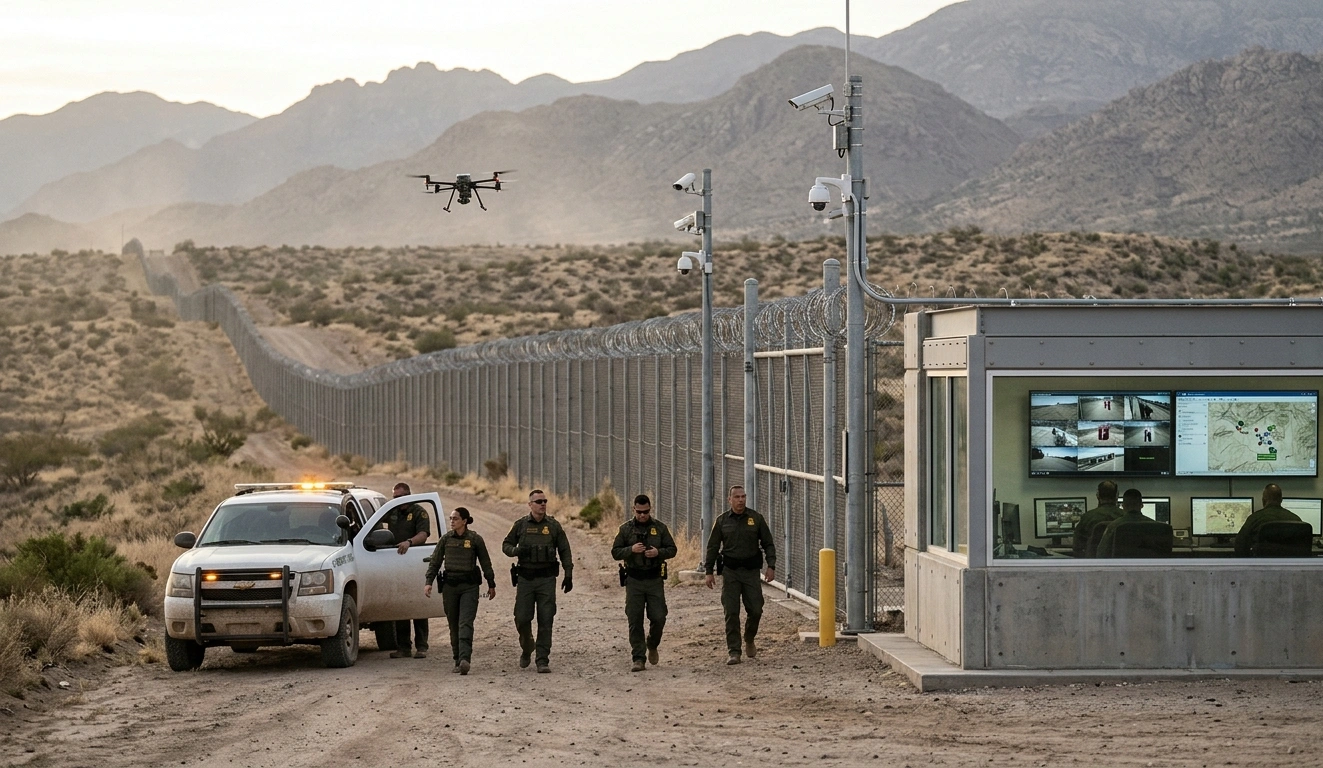
The role of surveillance has evolved significantly. It is no longer just about capturing video footage; it is about extracting intelligence from it. Modern systems are designed to detect patterns, identify anomalies, and trigger alerts before incidents escalate. This transition from passive monitoring to proactive security is reshaping how critical infrastructure is protected.
Advanced Video Management Systems (VMS) now serve as the backbone of surveillance, enabling centralized monitoring of large-scale deployments. When combined with Video Analytics (VA), these systems can automatically detect suspicious activities, safety violations, or operational anomalies in real time. This reduces dependency on manual monitoring and ensures faster, more accurate responses.
Integration: the key to operational resilience
One of the most significant shifts in 2026 is the move toward integrated security ecosystems. Disconnected systems-whether for surveillance, access control, or traffic management-create blind spots and delays in response. A unified platform eliminates these gaps by bringing together multiple systems into a single operational framework.
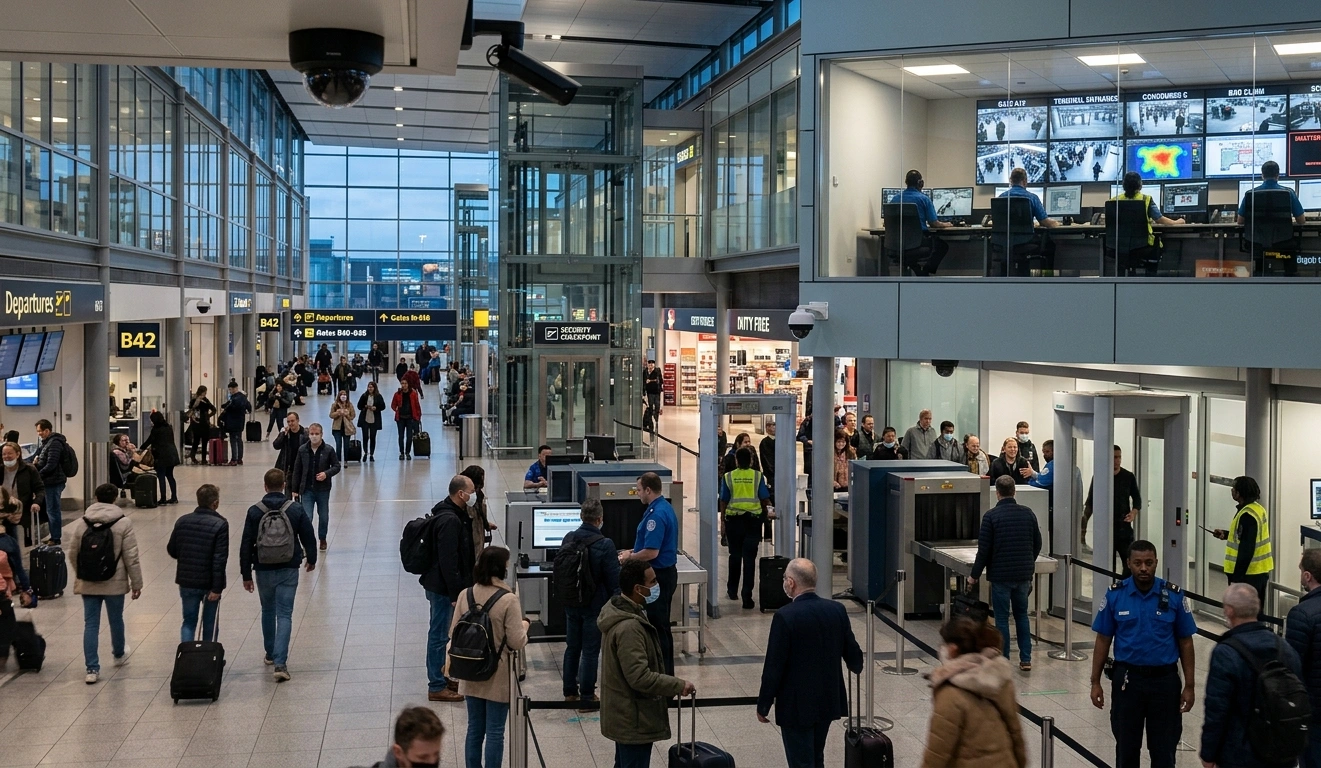
Central Management Systems (CMS) and Integrated Command and Control Centers (ICCC/PSIM) play a crucial role in this transformation. They enable organizations to monitor, manage, and respond to incidents from a centralized interface, ensuring seamless coordination across departments. This level of integration is particularly critical in high-risk environments, where even minor delays can lead to significant consequences.
Securing oil & gas infrastructure
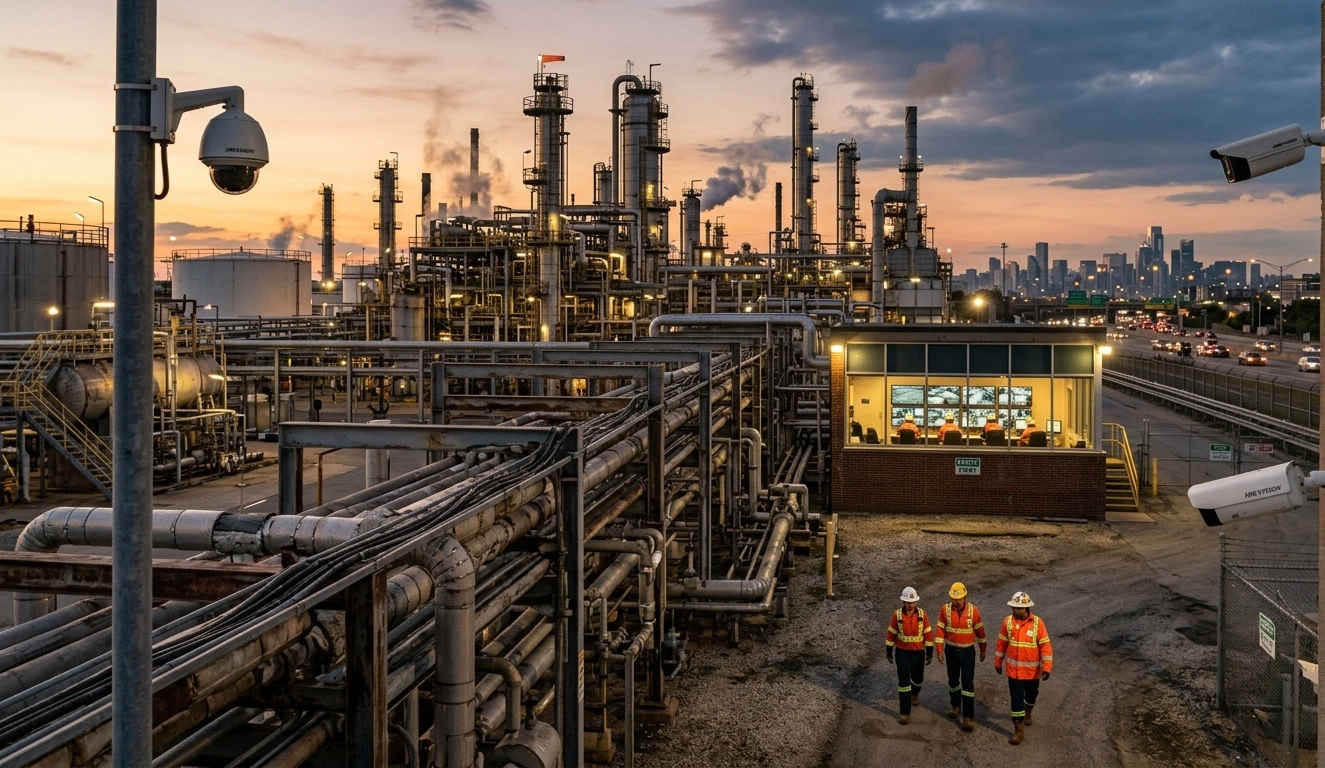
The oil and gas sector presents some of the most demanding security challenges. Facilities are often located in remote and harsh environments, making them difficult to monitor continuously. The risks include perimeter intrusion, unauthorized access, equipment tampering, and safety violations.
Intelligent surveillance solutions address these challenges by providing continuous visibility across all operational areas. Video analytics can detect unusual movements near restricted zones, while face recognition systems enhance access control by ensuring that only authorized personnel enter sensitive areas. Integrated command centers further enable real-time coordination, allowing teams to respond swiftly to any incident, regardless of location.
By combining these technologies, organizations can significantly reduce operational risks, enhance safety compliance, and ensure uninterrupted operations.
Enabling safer and smarter cities
As cities evolve into connected ecosystems, the scope of critical infrastructure extends beyond industrial facilities to include roads, public spaces, transportation systems, and utilities. Managing security in such environments requires a holistic approach that integrates multiple domains, including traffic management, law enforcement, and emergency services.
Intelligent Traffic Management Systems (ITMS), combined with VMS and analytics, enable authorities to monitor traffic flow, detect violations, and respond to incidents in real time. Meanwhile, ICCC platforms provide a centralized hub where data from various city systems is consolidated, enabling faster decision-making and improved coordination.
This integrated approach not only enhances public safety but also improves operational efficiency, making cities more resilient and responsive to evolving challenges.
From monitoring to decision-making
A defining characteristic of modern security systems is their ability to support decision-making. Data collected from cameras, sensors, and analytics engines is transformed into actionable insights that help organizations anticipate risks and plan responses effectively.
Whether it is identifying patterns of suspicious activity, predicting traffic congestion, or detecting early signs of operational failure, intelligent systems empower decision-makers with real-time information. This shift from reactive to predictive security is essential for maintaining continuity in critical infrastructure operations.
Building future-ready security ecosystems
As the complexity of infrastructure continues to grow, the need for scalable and adaptable security solutions becomes increasingly important. Systems must be designed to evolve with changing requirements, integrate new technologies, and handle expanding data volumes without compromising performance.
End-to-end platforms that combine VMS, CMS, Video Analytics, ITMS, Face Recognition Systems (FRS), and ICCC/PSIM capabilities provide the flexibility needed to meet these demands. By adopting such integrated ecosystems, organizations can ensure that their security infrastructure remains robust, responsive, and future-ready.
The road ahead
Securing critical infrastructure in 2026 is no longer about deploying isolated tools-it is about building intelligent, connected ecosystems that deliver real-time awareness and control. As risks become more dynamic and environments more complex, the ability to integrate, analyze, and act on information will define the effectiveness of any security strategy.
Organizations that embrace this transformation will not only enhance their security posture but also unlock new levels of operational efficiency and resilience. In a world where every second matters, intelligent surveillance is no longer just a support system-it is a strategic necessity.
Product marketing manager






 Legal disclaimer:
Performance metrics, deployment figures, analytics outputs, and results displayed on this website are based on specific implementation scenarios, controlled environments, or selected use cases. Actual performance may vary depending on hardware specifications, camera quality, network conditions, system configuration, site environment, lighting conditions, operational workflows, and other external factors.
All images, videos, illustrations, dashboards, maps, and demonstrations shown on this website are for representational, illustrative, and informational purposes only. They are intended to showcase product capabilities and possible deployment scenarios. Unless explicitly stated, no visual content should be interpreted as depicting an actual customer site, live project, installation, location, organization, or real-world event. Any names, layouts, footage, environments, or scenarios presented may be simulated, sample-based, licensed, generic, or recreated for demonstration purposes. Similarity to any actual site, entity, or project is purely coincidental. i2V systems accepts no responsibility and shall not be held liable for any errors, omissions, misuse, assumptions, or misinterpretation of product outputs, website content, visuals, or performance claims.
Legal disclaimer:
Performance metrics, deployment figures, analytics outputs, and results displayed on this website are based on specific implementation scenarios, controlled environments, or selected use cases. Actual performance may vary depending on hardware specifications, camera quality, network conditions, system configuration, site environment, lighting conditions, operational workflows, and other external factors.
All images, videos, illustrations, dashboards, maps, and demonstrations shown on this website are for representational, illustrative, and informational purposes only. They are intended to showcase product capabilities and possible deployment scenarios. Unless explicitly stated, no visual content should be interpreted as depicting an actual customer site, live project, installation, location, organization, or real-world event. Any names, layouts, footage, environments, or scenarios presented may be simulated, sample-based, licensed, generic, or recreated for demonstration purposes. Similarity to any actual site, entity, or project is purely coincidental. i2V systems accepts no responsibility and shall not be held liable for any errors, omissions, misuse, assumptions, or misinterpretation of product outputs, website content, visuals, or performance claims.